
Homes
Already have an Account? Sign In
Businesses
Commercial services are estimated onsite. Please click below to schedule your estimate.
Top 10 Signs of Water Damage in Your Home
Water damage does not always announce itself with a flooded basement or water pouring through the ceiling. Sometimes the first clue is much smaller, such as a faint brown spot, a musty smell that keeps coming back, or a section of flooring that suddenly feels different under your feet.
Recognizing the early signs of water damage can help you find a leak before moisture spreads farther into drywall, insulation, flooring, carpet padding, or other building materials. Time matters, too. The EPA recommends drying wet materials within approximately 24 to 48 hours when possible to reduce the opportunity for mold growth.
Here are 10 common signs of water damage homeowners should know how to recognize.
Common Signs of Water Damage and Ways to Respond
1. Water Stains and Discoloration
One of the most recognizable signs is a yellow, tan, or brown mark on a wall or ceiling. You may notice a solid patch of discoloration, a water ring, or an irregular stain that gradually spreads.
The location can sometimes provide clues about the source. A ceiling stain beneath a bathroom could point to plumbing above it. Discoloration near an exterior wall might be connected to a roof or exterior leak.
Pay particular attention to stains that change. If a spot becomes darker after heavy rain, grows over time, or changes after someone uses an upstairs shower or sink, the moisture source may still be active.
2. Peeling, Bubbling, or Blistering Paint
Paint and wallpaper can reveal moisture problems before you ever see standing water.
Water trapped behind drywall may cause paint to bubble, blister, peel, or separate from the surface. Wallpaper may begin lifting at the seams or pulling away from the wall.
Simply sanding and repainting the area will not solve the problem if moisture is still entering from behind. The source of the water needs to be identified and corrected first.
3. A Persistent Musty Smell
Sometimes you can smell water damage before you can see it.
A musty or damp odor that continually returns can indicate moisture in an area that is difficult to inspect, such as behind drywall, beneath flooring, under carpet padding, or inside a cabinet.
The EPA specifically notes that mold can grow in hidden areas and that moisture control is the key to preventing indoor mold problems.
If a room smells musty even after it has been cleaned and aired out, look for a moisture source rather than trying to cover the odor.
4. Warped, Buckled, or Cupped Flooring
Water can cause noticeable changes to flooring materials.
Hardwood boards may cup at the edges, buckle, or begin separating. Laminate or vinyl flooring can lift or warp. Subflooring may soften, creating areas that feel uneven when you walk across them.
Carpet can be especially deceptive. The fibers on top may feel relatively dry while water remains trapped in the carpet pad or subfloor underneath.
If flooring suddenly changes shape or develops soft areas without an obvious explanation, hidden moisture should be considered.
5. Soft, Swollen, or Sagging Drywall
Drywall is porous, so it can absorb water from leaks behind or above it.
Watch for areas that feel soft, swollen, crumbly, or unusually flexible. A ceiling may also begin bowing or sagging when water accumulates above it.
A noticeably sagging ceiling deserves immediate attention. Avoid standing directly beneath an area that appears heavily saturated because wet building materials can lose strength.
6. Visible Mold or Mildew
Visible mold is more than a cleaning issue. It is also a clue that moisture is or was present.
Mold can grow on materials such as drywall, wood, carpet, and other surfaces when adequate moisture is available. The EPA advises correcting the underlying water problem along with addressing the mold itself. Otherwise, the growth can return.
For larger or more complicated situations, Modernistic also provides professional mold remediation services.
7. An Unexplained Increase in Your Water Bill
Not every hidden leak creates a visible stain right away.
A leaking pipe, toilet, appliance supply line, or plumbing connection can waste water for days or weeks before obvious damage appears. If your water use has not changed but your bill suddenly increases, it may be worth investigating.
A high bill does not automatically mean your home has water damage, but when it appears alongside dampness, stains, unusual sounds, or other warning signs, it can provide another clue that water is escaping somewhere it should not.
8. Dripping, Running, or Hissing Sounds
Your ears can sometimes identify a hidden leak before your eyes do.
If you hear dripping, running water, or a faint hissing sound when faucets and water-using appliances are turned off, try to determine where the sound is coming from.
Pay attention to walls, ceilings, utility rooms, bathrooms, and kitchens. Water traveling through a wall cavity can eventually affect drywall, insulation, flooring, and other materials before it becomes visible in the room.
9. Rust, Corrosion, or Mineral Buildup
Rust or corrosion around plumbing connections can indicate that an area has been repeatedly exposed to moisture.
Check around visible pipes, water heaters, appliance connections, plumbing fixtures, and other water-related equipment. Mineral deposits, discoloration, or moisture staining near the connection can provide additional clues.
These signs do not always mean major water damage has occurred, but they can help you identify a slow leak before it becomes a larger problem.
10. Persistent Dampness or Excessive Humidity
A surface that stays damp without an obvious reason should not be ignored.
Repeated condensation on walls, pipes, or windows may indicate elevated humidity. Damp basement walls could point to foundation moisture or water intrusion. Moisture around HVAC equipment may indicate a drainage or condensation issue.
The EPA recommends keeping indoor relative humidity below 60 percent when possible, ideally between 30 and 50 percent, and addressing condensation or moisture as soon as it appears.
Drying the visible surface is only part of the solution. You also need to determine why the moisture keeps returning.
Where Can Hidden Water Damage Occur
One of the most challenging things about water damage is that the wettest area may not be visible.
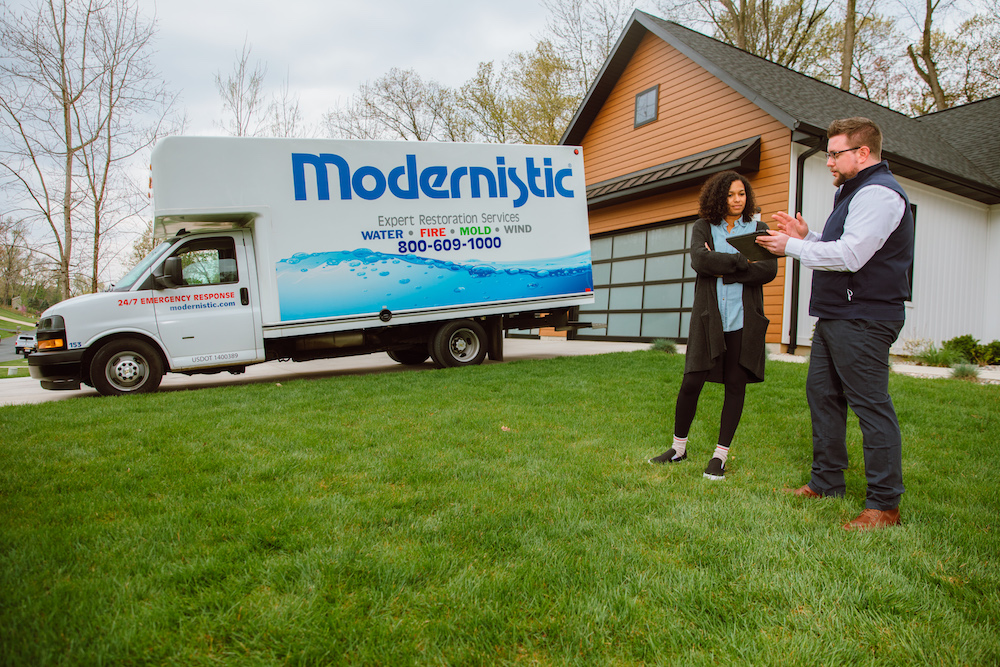
Water can travel behind drywall, beneath carpet padding, underneath hardwood or laminate flooring, through insulation, above ceilings, around pipes, behind cabinets, and into basements or crawl spaces.
That is why a room can appear dry while moisture remains trapped inside the structure.
Modernistic uses moisture metering and moisture mapping to identify hidden moisture in floors, ceilings, walls, and other affected materials during professional water damage restoration services. Our restoration process also uses commercial air movers and dehumidifiers to dry affected building materials after standing water has been removed.
Read More: Is Professional Carpet Cleaning Better than Doing It Yourself?
Is It an Old Water Stain or Active Water Damage?
Finding an old stain does not necessarily mean water is still entering your home.
Start by watching the area. Does the stain become larger or darker after rain? Does it change when an upstairs plumbing fixture is used? Has nearby paint started bubbling? Does the drywall feel soft? Is there a new musty odor?
Professional moisture testing can provide a more reliable answer when the source is unclear. A surface can appear dry to the touch while surrounding or underlying materials still contain elevated moisture.
This is an important distinction because successful restoration is not simply about making visible water disappear. The affected building materials need to reach an appropriate dry condition as well.
What Should You Do When You Find Water Damage?
Safety comes first. If the source can be stopped safely, shut off the affected water supply or arrange for the appropriate repair. Do not enter standing water when electrical equipment, outlets, or other electrical hazards may be involved.
If significant water intrusion has occurred, document the affected areas and move dry, unaffected possessions away from the water when it is safe to do so. Modernistic recommends leaving already-wet belongings in place when moving them could spread moisture or interfere with documenting the loss.
Sewage backups and contaminated floodwater require additional precautions and should not be treated the same way as a small clean-water plumbing leak.
For substantial leaks, flooding, or water that has traveled into walls and flooring, professional residential water removal can help determine how far the moisture has spread and what needs to be dried or removed.
Professional Water Damage Restoration Services
Active flooding, burst pipes, sewage backups, rapidly spreading water, water near electrical systems, and a heavily sagging ceiling should all be treated seriously.
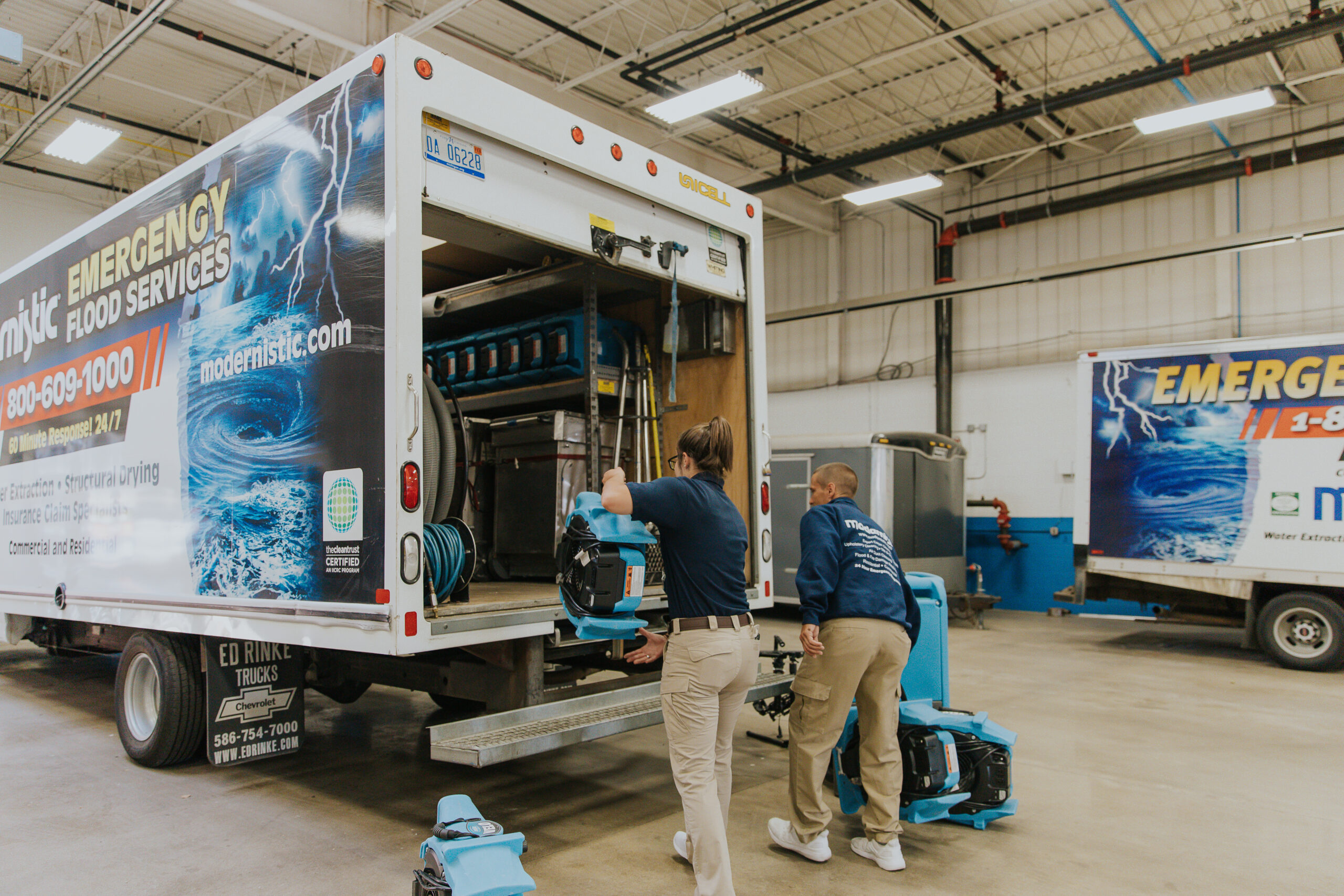
Modernistic provides water damage restoration services in Detroit, Michigan along with the surrounding areas including Ann Arbor, Battle Creek, Grand Rapids, Kalamazoo, Traverse City, and Troy. We are available 24 hours a day, 7 days a week, 365 days a year. Once we receive your call, our team will arrive within 60 to 90 minutes.
Our technicians utilize truck-mounted extraction equipment to remove standing water before beginning structural drying with air movers and commercial-grade dehumidifiers.
Modernistic has provided restoration services to Michigan homeowners and businesses since 1973. Our IICRC-certified technicians use professional moisture detection, water extraction, dehumidification, and structural drying equipment to address both visible and hidden moisture. Give our team a call at (800) 609-1000 to receive support.